

Where Does Your Data Live During War? Cloud Security Risks Explained
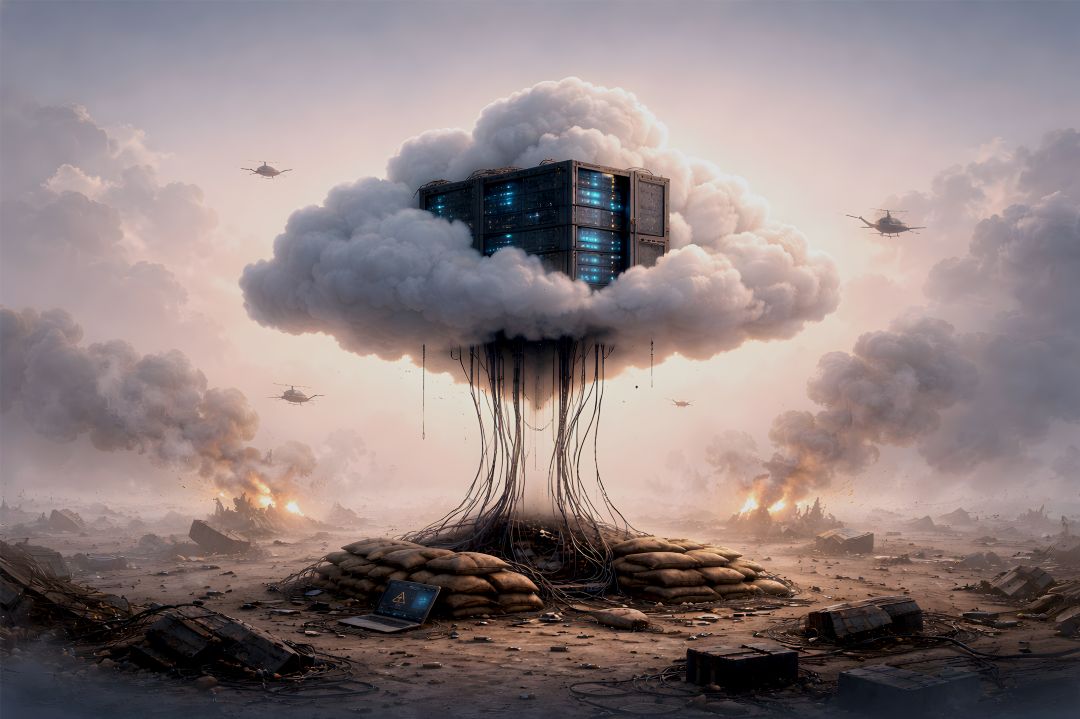
Cloud security risks are no longer theoretical. Recent tensions like the US–Iran conflict show how digital infrastructure is tied to geopolitical events.
Your data, although instantly accessible, is often stored across multiple data centers across different countries.
So when things go wrong, one question becomes critical: Where does your data actually live?
Where Does Your Data Actually Live?
When we say “the cloud,” it often feels like something abstract. Invisible and everywhere at once.
But in reality, the cloud is physical infrastructure.
Your data is stored in data centers. These are large facilities filled with servers, storage systems, and networking equipment. They are owned and operated by cloud providers and are spread across different parts of the world.
Depending on your provider and configuration, your data could be located in:
- The United States, where many major cloud providers operate large-scale infrastructure
- The Middle East, where regional data centers support growing demand
- Europe and other regions are often used for redundancy and compliance
In many cases, your data is not stored in just one place. It may be replicated across multiple locations to ensure availability and performance.
This is what makes cloud services fast and reliable. But it also means your data is distributed across systems you do not physically control.
Your data may be accessible from anywhere, but it is not controlled by you.
Cloud Security Risks During War
In stable conditions, cloud systems work seamlessly.
But during conflict, the risks become more visible.
a) Physical Infrastructure Risk
Cloud storage depends on data centers, which are physical locations.
In times of war, infrastructure can become a target or get caught in disruption.
This means:
- Data centers may be damaged or go offline
- Regional infrastructure can be impacted
- Recovery may take time, depending on the location
b) Access & Network Disruptions
Even if your data is intact, access is not guaranteed.
During conflict, you may face:
- Internet outages
- Region-level shutdowns
- Slower or unreliable service
Access to cloud systems depends on stable networks, which can be disrupted.
c) Dependency Risk
Cloud storage is not just about data. It is about dependency on external systems.
You rely on:
- Provider uptime
- Geopolitical stability
- Cross-border infrastructure
If any of these are affected, your ability to access and manage data is impacted.
USA vs Iran: A Real Example of Cloud Security Risks
Tensions between the United States and Iran show how modern conflicts can extend beyond physical borders and impact data systems and connectivity.
In regions like the Middle East, where global cloud providers operate data centers, infrastructure can become vulnerable during periods of conflict.
Key risks observed include:
- Physical targeting of infrastructure
Data centers and critical facilities can be directly or indirectly impacted during conflicts
- Service disruptions
Instability in a region can lead to outages, slower services, or restricted access for businesses relying on cloud systems
- Ripple effects on global operations
Since cloud infrastructure is interconnected, disruptions in one region can affect users in other parts of the world
Modern conflicts are no longer limited to land or resources.
They increasingly involve digital infrastructure, networks, and data systems.
The Real Risk: Lack of Control
Cloud storage gives you access, but it does not guarantee control.
Most businesses rarely question this until something goes wrong.
- Do you know where your data is actually stored?
- Can you access it if systems fail or regions are disrupted?
In stable conditions, cloud platforms feel seamless. Files load instantly, systems stay online, and everything appears reliable.
But in uncertain situations, that reliability can break down quickly.
Access can fail due to factors beyond your control:
- Entire regions can go offline due to infrastructure disruption
- Providers may restrict or limit access based on policies or conditions
- Data migration or recovery can take time, especially at scale
What this reveals is a fundamental gap.
You may be able to use your data.
But you do not fully control the systems that store and deliver it.
Access depends on the provider. Control depends on ownership.
And during disruption, that difference becomes critical.
Because in reality:
Access to data is not guaranteed, especially when it matters most.
Rethinking Data Storage
If access is uncertain, the question changes.
It is no longer just about storing data.
It is about controlling how and where it is stored.
A different approach is emerging:
- Private cloud systems
- Locally controlled infrastructure
- Reduced dependence on external providers
Instead of renting storage, businesses can build systems they control.
Solutions like MyFlopy make this possible by turning existing computers or storage devices into private cloud environments.
This shifts the model from dependency to control.
Conclusion
In stable times, the cloud works as expected. But in uncertain situations, cloud security risks become more visible.
Infrastructure can be disrupted. Access can be restricted. And systems you rely on may no longer be fully in your control.
It is not just about where your data lives.
It is about who controls it, and how reliably you can access it when it matters most.
Frequently Asked Questions
- 1. Can cloud data really be affected by geopolitical conflicts?Yes. Cloud infrastructure depends on physical data centers and global networks. During geopolitical conflicts, these can face disruptions such as outages, restricted access, or infrastructure damage, which can impact data availability.2. Is my data stored in one location or multiple places?In most cloud setups, data is stored across multiple data centers in different regions for redundancy and performance. While this improves reliability, it also means your data is distributed across locations you do not control.3. What happens if a cloud provider’s region goes offline?If a region goes offline, providers may shift operations to other locations. However, this can still lead to delays, limited access, or temporary service disruptions depending on the situation.4. Does cloud storage guarantee access to my data at all times?No. While cloud providers aim for high uptime, access depends on network stability, infrastructure availability, and external conditions. In extreme scenarios, access may be delayed or temporarily unavailable.
5. How can businesses reduce dependency on external cloud providers?
Businesses can explore private or hybrid cloud setups, where critical data is stored on controlled infrastructure. This reduces reliance on external systems and improves control over access and availability during disruptions.